
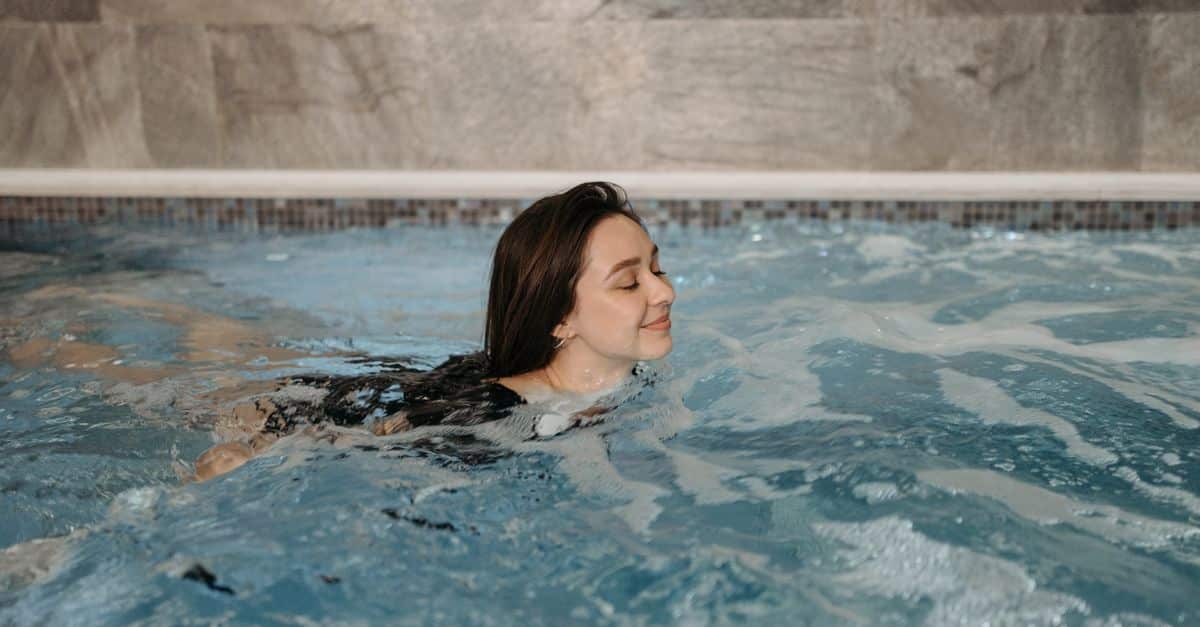
A beginner swim spa workout routine should be easy to repeat: start with water walking, practice short swims against a gentle current, add a small amount of strength work, and finish with a gradual cool-down. Plan for two or three sessions a week at first. A 15 to 20 minute session gives you room to learn the controls and your own comfortable pace without treating every workout as a test of endurance.
At Patio Life, we recommend building your routine around control rather than current strength. If you can keep your position, breathe steadily, and finish a session feeling ready to return, you have found a useful starting level. As those basics become familiar, extend your swimming intervals or add an exercise, changing one part of the routine at a time.
A swim spa offers more than stationary swimming. Water walking, gentle jogging, bodyweight movements, and optional rowing can give beginners different ways to exercise without relying on one stroke for the whole session. The plan below shows how to put those movements together, choose an appropriate effort, and adapt the routine to your equipment.
What counts as a beginner swim spa workout?
A beginner swim spa workout is a structured exercise session in a swim spa that combines a warm-up, manageable cardio, optional strength or mobility work, and a cool-down. You do not have to swim continuously to get started. In fact, learning to move comfortably through the water and hold a stable position against the current is a sensible first goal.
The current lets you swim in place, while the water itself provides resistance for movements such as walking, leg lifts, and arm sweeps. Many swim spas also include therapy seating, so the same backyard space can serve exercise and relaxation. Keep those purposes distinct when planning a workout: choose a comfortable exercise setting for movement, then use therapy features as intended after you have cooled down.
We find it helpful to think of the first few weeks as practice in three skills: position, meaning you can stay comfortably in the swim area; breathing, meaning you can maintain a relaxed rhythm; and repeatability, meaning the workout fits into your week without leaving you unusually depleted. Speed can wait until those skills feel dependable.
Set up the swim spa before you exercise
Spend a few minutes getting oriented before your first session. Controls, current direction, available standing room, and the way you enter and exit will affect which exercises feel comfortable. Check your owner’s manual for operating instructions and any restrictions on accessories or attachments.
- Find your exit: Locate the steps and stable handholds before turning on the current. Keep the surrounding area clear so you can leave the water without stepping over equipment.
- Check the water: Use a temperature that feels comfortable for activity, rather than assuming a setting you enjoy for soaking will also suit a workout. Follow your model’s operating guidance.
- Start with the current low: Test it while you are standing securely, then try a short, easy swim. You should not need to sprint to avoid drifting.
- Plan your breaks: Identify where you can stand or rest safely when an interval ends. Stop or reduce the current before moving into a different exercise area.
- Keep drinking water nearby: Being in water can make it less obvious that you are working hard. Pause and drink as needed.
If you are not a confident swimmer, begin with water walking and other movements that let you stand securely. Have another adult nearby when you are learning to use the swim spa. If you have an injury, a cardiovascular concern, or a condition that affects exercise tolerance, ask a healthcare professional what level of activity is appropriate before starting a new routine.
Build each session in five parts
A simple structure makes your workouts easier to follow and easier to adjust. Use the following sequence as a starting framework, not as a pace you must meet:
- Warm up for 3 to 5 minutes. Walk through the water and move your arms and shoulders gently.
- Practice the current for a few minutes. Swim briefly at a low setting, resting between attempts until you can find a stable position.
- Complete one main cardio set. Choose short swimming or water-walking intervals that allow steady breathing.
- Add one or two strength movements. Keep them controlled, with enough room to maintain your balance.
- Cool down for 2 to 5 minutes. Slow the movement, reduce or stop the current, and exit carefully.
You can shorten the main set if orientation and technique take more time than expected. A successful first workout might include only a few brief swims. That is still a workout, and it gives you a clearer basis for planning the next one.
Warm-up: make movement comfortable first
Start with the current off or at its gentlest useful setting. Walk forward through the water, then try walking sideways if there is space to do so safely. Move your arms through a comfortable range, roll your shoulders gently, and lift each knee without rushing. The aim is to settle into movement, not to tire yourself before swimming.
Notice how the water changes your balance. A sideways step may feel different from walking on land, and pushing your arms quickly through the water creates more resistance than moving them slowly. Use that feedback to choose movements you can control. If you need support, use a stable feature intended for that purpose rather than pulling on jets or other fittings.
Current practice: learn where you swim best
With the current low, try a short swim and pay attention to where your body settles. You want enough flow to swim in place without repeatedly reaching the end of the swim area or being pushed out of alignment. Rest, adjust the setting if needed, and try again. Resist the urge to increase the current simply because the workout feels easy at first.
Keep your neck relaxed and breathe out rather than holding your breath through a difficult stroke. If your shoulders tense, your position becomes erratic, or you cannot maintain a comfortable breathing rhythm, lower the current. The right beginner setting is the one that lets you practice a consistent stroke.
Main set: choose swimming or standing cardio
For a first swimming set, try four easy swims of about 30 seconds, resting or walking gently between them. When those feel controlled, try two-minute swims separated by a minute of recovery. The rest period is part of the workout: it lets you reset your breathing and return to the next interval with better form.
If swimming is not yet comfortable, build the main set around water walking. Walk at an easy pace, briefly increase your pace, then return to easy walking. Gentle jogging in place can be another option where the swim spa gives you secure footing and adequate room. Keep your torso upright, shorten your steps if you lose balance, and use the current only at a level you can manage.
These approaches can also alternate within a session. For example, you might swim briefly, recover by standing or walking, then complete another short swim. There is no need to force continuous swimming just to make the workout count.
Strength and mobility: pick a small, useful combination
Standing exercises let you work against the water without adding equipment. Start with one lower-body movement and one upper-body movement, keeping each repetition deliberate:
- Water squats: Stand with your feet comfortably apart, bend your hips and knees within a comfortable range, then return to standing. Keep your feet in contact with the floor and stop if you cannot maintain balance.
- Side leg lifts: Stand tall, hold a suitable stable support if needed, move one leg out to the side, and bring it back slowly. Avoid leaning your whole body to create a larger movement.
- Arm pushes: With your arms under the water, push your hands forward and bring them back at a controlled pace. Open palms create more resistance than slicing through the water with the edges of your hands.
- Gentle torso turns: Stand securely, keep your movements small, and turn within a comfortable range rather than twisting against a strong current.
You do not have to complete every exercise in one visit. Choose movements you can perform well, and leave room for a cool-down. Resistance rowing and other equipment-based exercises are options only if your specific swim spa supports the appropriate kit. Follow the accessory and attachment instructions for your model rather than improvising an anchor point.
Cool-down: slow down before you get out
Reduce or stop the current, walk easily, and let your breathing settle. Gentle arm movements can help you transition out of the main set without coming to an abrupt stop. When you are ready to leave, use the steps and handholds, taking care on wet surfaces. Drink water and note how the session felt; that observation will help you choose your next workout.
A four-week beginner swim spa workout plan
The schedule below offers three varied sessions per week. Place a recovery day between demanding sessions. If two sessions fit your energy and schedule better, start there and repeat a week before progressing. Times describe the whole workout, including warm-up and cool-down, and are examples rather than targets to push through discomfort.
| Week | First session | Second session | Third session |
|---|---|---|---|
| 1 | About 15 minutes: warm up, practice four 30-second easy swims with generous rests, cool down. | About 15 minutes: water walking with brief changes of pace, followed by gentle arm movements. | About 15 to 20 minutes: short swims or walking, then water squats and side leg lifts. |
| 2 | About 18 to 20 minutes: try several easy swims of up to two minutes, recovering between them. | About 18 minutes: alternate gentle water jogging or brisk walking with easy walking. | About 18 to 20 minutes: repeat a comfortable cardio set and add two controlled strength movements. |
| 3 | About 20 minutes: add a swim interval if your breathing and position remain steady. | About 20 minutes: alternate one-minute swims with one-minute easy recoveries, or use walking intervals. | About 20 minutes: mix swimming, standing cardio, and strength work you already know. |
| 4 | About 20 to 25 minutes: extend one or two swims while keeping the current comfortable. | About 20 minutes: repeat your interval set; adjust the current only if every interval stays controlled. | About 20 to 25 minutes: assemble your preferred mix of cardio, strength, and mobility. |
The plan deliberately varies the type of work rather than making every session a harder swim. By the end of a week, ask yourself which workout felt easiest to repeat and which movement needs more practice. If fatigue or soreness affects your form, repeat the previous week’s routine instead of advancing automatically. You can also replace a swim day with water walking while you work on technique.
How to choose the right current and progress safely
Current strength is only one way to make a swim spa workout harder. Longer work intervals, shorter rest periods, and additional sessions also increase the demand. Changing all of them together makes it difficult to tell what helped or what caused a problem. Our approach is to keep most of the routine familiar and adjust just one detail after a session feels consistently manageable.
Use breathing and position as your practical effort checks. During an easy interval, you should be able to move without fighting to stay centered. During a somewhat harder interval, you may breathe more deeply, but you should still be able to recover when it ends. If you repeatedly drift, shorten your stroke to keep up, or feel forced to hold your breath, the setting is too demanding for that attempt.
A brief workout note is enough to guide progression. Record the exercises you did, roughly how long you worked, the current setting if you used one, and how you felt afterward. On a later session, you might add one short interval or extend a swim slightly. You could instead keep the cardio unchanged and practice a new strength movement. There is no advantage to increasing resistance before you can move comfortably at the current level.
Adapt the routine to your goal
If you are learning to swim against a current
Give most of your attention to short swims and recovery. Learn to settle into the flow, breathe steadily, and stop while your stroke still feels controlled. A small amount of water walking makes a useful warm-up and gives you a place to reset between attempts. As your position improves, increase the length of the swim before considering a stronger current.
If you want a varied low-impact workout
Use swimming as one part of the session, not the whole program. Alternate it with standing movements such as water walking, side steps, and water squats. The water offers resistance for those exercises, while changing movements gives your swimming muscles a break. Work within the available standing area, and turn the current down or off whenever it interferes with balance.
If you are interested in resistance rowing
First establish a comfortable basic routine so you can distinguish normal effort from poor positioning. If your model has a compatible rowing kit, learn its setup and use from the manufacturer’s instructions before adding it to a workout. Start with controlled movements and keep rowing as one component of the session rather than stacking it on top of an already tiring swim set. Our guide to rowing, adjustable currents, and post-workout massage explains how those priorities affect swim spa selection.
If two people have different fitness levels
Each person should choose a current and interval length based on their own control and breathing. One person may be ready for longer swims while the other prefers water walking and brief swimming practice. A shared swim spa does not require a shared workout setting. Adjust controls between users and compare progress against your own previous sessions, not someone else’s pace.
Match the workout to the swim spa
When choosing a swim spa for a beginner routine, look beyond the strongest available current. Ask whether you can make small, comfortable adjustments, whether the swim area suits your movement, and whether you want space for aquatic exercise as well as swimming. Therapy seating may matter if relaxation is part of your backyard plan, but it does not replace a well-matched exercise area.
Marquis swim spas at Patio Life combine swimming, aquatic exercise, and hydrotherapy. Within the range, the V150W has an open layout that prioritizes room for aquatic fitness and includes four Whitewater-4 swim jets. The V150P pairs adjustable swimming and therapy settings with open seating for eight adults. On both models, a resistance rowing kit is optional, so it is worth deciding whether rowing belongs in your plan before choosing accessories.
For someone considering a longer swim area, the V174S has adjustable swim jets and a 14.5-foot length. The V174K offers a stronger available swim flow. More available power is not a reason for a beginner to start at a harder setting; it is a feature to weigh against how you expect your workouts to develop. If you are comparing compact swim-focused space with more family seating, our V150P and V150W comparison looks at that choice in more detail.
Whatever model you use, build the routine around its actual controls, dimensions, and manufacturer guidance. Avoid assuming that an exercise or accessory shown for one swim spa belongs in another.
Best practices that make a routine sustainable
- Make the first session easier than you think it needs to be. It gives you time to learn the equipment and identify a useful starting current.
- Keep recovery breaks. Short rests are not a failure to swim continuously; they help you practice better technique on the next interval.
- Use variety with a purpose. Walking can warm you up, swimming can build familiarity with the current, and standing exercises can add resistance work.
- Change one variable at a time. Add duration, frequency, or current strength separately so you can judge the effect.
- Respect signs that you should stop. If you feel dizzy, faint, unusually short of breath, or unwell, stop exercising and leave the water carefully. Seek appropriate medical advice when symptoms call for it.
- Take care entering and exiting. A controlled workout can still end with a slip if you rush onto a wet surface.
Consistent water care matters, too, especially when the swim spa becomes part of your weekly routine. Check and balance the water according to your model’s instructions, keep filters clean, and use the cover when the spa is not in use. If the water looks cloudy, smells unusual, or feels uncomfortable, address the water condition before your next workout rather than exercising through it. Keeping the swim area pleasant removes one more obstacle to showing up regularly.
Frequently asked questions about beginner swim spa workouts
Do I need to know how to swim to exercise in a swim spa?
No. Water walking, gentle standing cardio, and controlled strength movements can form a beginner routine without swimming. Stay where you can stand securely, learn the controls, and do not attempt swim-current exercises beyond your comfort or ability. If learning to swim is your goal, instruction from a qualified teacher can help you develop the skills to use the current confidently.
How long should my first workout be?
About 15 to 20 minutes, including a warm-up and cool-down, is a practical example. Make the main set shorter if you need more time to learn the current or rest between efforts. The quality of your movement matters more than reaching a particular duration.
How often should beginners use a swim spa for exercise?
Two or three sessions per week is a manageable place to start. Leave room to recover between demanding workouts. You can add sessions later if you are finishing the current routine comfortably and recovering well.
What current setting is best for a beginner?
Use a low setting that lets you hold your position with a relaxed, repeatable stroke. There is no universal setting because controls, swim styles, and comfort levels vary. If you cannot breathe steadily or stay aligned, reduce the current and shorten the interval.
Can I get a workout without using the current?
Yes. Water walking, side steps, squats, leg lifts, and arm pushes all use the resistance of the water. Turn the current off when it makes standing exercises less stable. A current-free session can also be useful when you want to concentrate on movement rather than swimming technique.
When should I add rowing or harder swim intervals?
Add them after your basic routine feels controlled and you know how to recover between efforts. Introduce one new challenge at a time. Rowing requires a compatible, properly installed kit, while harder swim intervals require a current you can handle without losing breathing rhythm or body position.
Can I use hydrotherapy seating instead of cooling down?
No. First slow your exercise pace and let your breathing settle. If you then use therapy seating, follow your swim spa’s guidance for water temperature and use. Treat relaxation as a separate part of the visit, not a replacement for ending the workout gradually.
What if I cannot finish the planned intervals?
Shorten them, lengthen your rests, or switch to water walking. A plan is useful only when it helps you move safely and return for the next session. Repeat a comfortable version until you can complete it with steady breathing and controlled movement.
Start with a routine you will want to repeat
The best beginner plan is not the one with the strongest current or the longest swim. It is the one that gives you a clear warm-up, manageable intervals, a little variety, and enough recovery to come back. Begin with water walking and short swims, build confidence with the controls, and progress only when your position and breathing remain steady.
If you are planning a backyard exercise space in Boise, Meridian, or Eagle, visit Patio Life to compare Marquis swim spas and talk through the balance of swimming room, adjustable current, aquatic exercise, and therapy seating that fits the routine you want to build.
