
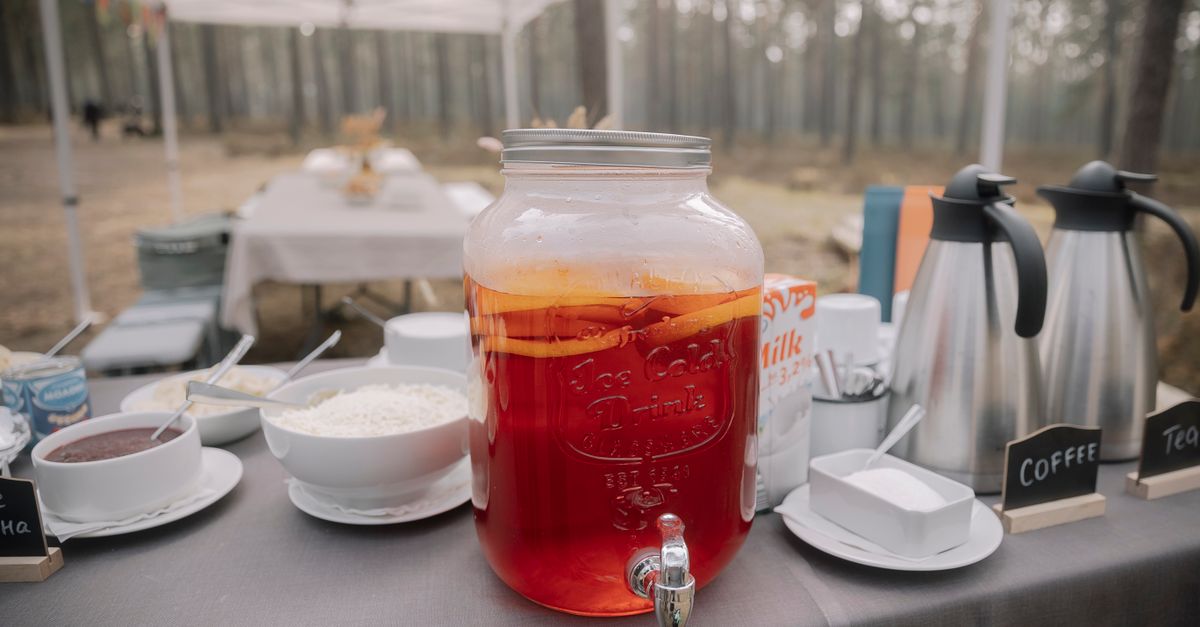
To keep guests moving at Thanksgiving, set up the patio serving station as a route, not a collection of dishes. Put plates at the entrance to the food line, arrange the meal in the order people will serve it, and place drinks where they will not interrupt that line. Keep the station off the path between the kitchen door and dining chairs, and give guests an obvious place to set down used dishes.
At Patio Life, we recommend choosing the layout before choosing the serving table. A spacious table cannot fix a doorway bottleneck, while a modest outdoor table can work beautifully when the route around it is clear. For Thanksgiving in Boise, Meridian, or Eagle, plan for wind and changing temperatures as carefully as you plan the menu.
The simplest layout: kitchen door to plates, main dishes, sides, finishing items, then dining. Put beverages on another surface if possible. Keep dessert off the dinner line until it is time to serve it.
What is a patio serving station?
A patio serving station is a dedicated outdoor surface, or a small group of surfaces, where guests collect food and drinks before sitting down. It is not necessarily a full buffet. On a compact patio, a station might hold only beverages and dessert while the main meal stays indoors. On a larger patio, an outdoor dining table can hold the meal while a counter-height table handles drinks.
The distinction matters because the goal is not to move everything outside. The goal is to prevent guests from clustering around the kitchen counter or reaching past one another at the dining table. A useful serving station has a stable surface, a predictable approach and exit, space for serving utensils, and a clear way back to the kitchen for refills.
Start with the route guests will actually take
Before setting a plate on the patio, walk from the kitchen to the outdoor dining area. Open the door fully. Pull out a dining chair. Imagine carrying a platter out while someone else carries a full plate away. The area where those trips intersect is not the place for a serving line.
We use a simple planning sequence for outdoor gatherings: door, queue, serve, sit, return. Each part needs a place of its own. The door must remain usable for the cook. The queue should not block the door or anyone seated. The serving surface should let guests reach each dish without leaning across another person. The route to seating should lead away from the line. The return route should make it easy to take empty dishes back inside without crossing guests who are still getting food.
Look for a side approach
Place the station beside the main path rather than directly in it. If it sits against a wall or railing, guests can follow its length without walking behind dining chairs. Check that a chair can still be pulled out when someone is standing at the station.
Test the exit
Guests need somewhere to go after adding gravy or taking a roll. Leave the end of the station open toward the dining area. If the only exit sends them back past the people waiting, reverse the serving direction or move the table.
Our guide to space around outdoor dining furniture can help when you are deciding whether the buffet belongs near the table or on a different side of the patio. Use the actual footprint of pulled-out chairs, not just the tabletop dimensions, when testing your layout.
Build the food line in the order guests use it
People move faster when the next item is where they expect it. Arrange the station so no one has to turn around for a plate, return for a fork, or step through the line to find gravy. The exact direction depends on the patio. What matters is that every guest approaches from the same end and leaves from the other.
- Begin with plates. Put them on the approach side, close enough to the first dish that guests can step forward immediately. If children will serve themselves, make sure they can safely reach their plates without leaning over hot food.
- Place the main dish where there is room to pause. Turkey or another centerpiece often takes longer to serve than a bowl of vegetables. Give that dish a stable spot and enough elbow room for the person handling it.
- Follow with sides. Keep serving utensils with their dishes, with handles pointing toward the guest side. Group dishes by the order guests are likely to put them on a plate, rather than by how attractive they look together.
- Finish with gravy, sauces, and rolls. Items that guests add after filling a plate belong toward the end. If gravy creates a slow point, move it onto a nearby side table so another guest can continue along the main line.
- Put napkins and flatware at the exit. Guests can pick them up after serving instead of trying to balance a fork and napkin while lifting food.
A single long buffet is not always the fastest arrangement. If guests need to wait for carving, consider having the main dish portioned before people start serving. If one family member needs assistance, give them room to approach the station without trapping everyone else behind them. Smooth traffic comes from removing interruptions, not from rushing anyone.
Do a full-plate rehearsal. Carry an empty dinner plate from the start of the line to a dining chair. If you need to turn sideways to pass a chair, backtrack for utensils, or stop in the doorway, adjust the furniture before guests arrive.
Give drinks their own destination
Drinks often create a different kind of traffic from dinner. Someone may refill water while others are still serving, and a guest arriving late may want a drink before a plate. Keeping beverages off the main food table prevents those trips from cutting across the buffet line.
For a compact patio, a counter-height surface can keep drinks together without using a full dining table. Our POLYWOOD bar and counter furniture includes tables and stools suited to outdoor entertaining. Place cups where guests first approach, followed by the drinks and any additions they need. Keep the setup reachable without requiring guests to pass behind someone carrying a hot plate.
If the patio is too tight for separate tables, simplify the drink service instead. Put water and other beverages in one accessible spot away from the kitchen door, then clear that surface before dessert. A separate station is useful only if it improves movement; an extra table that blocks a chair does the opposite.
Choose a serving surface for the job, not just the occasion
Thanksgiving lasts a day, but the furniture should work for ordinary meals and gatherings too. Choose based on what the surface needs to hold, how guests will approach it, and whether you will still have enough comfortable seating.
| Outdoor surface | Best serving role | Layout consideration |
|---|---|---|
| Dining table | Main meal or a generous shared buffet | Use it as a buffet only if diners have another place to sit and eat. |
| Counter-height table | Drinks, appetizers, or a compact station | Keep guests standing at the counter out of the route to dining chairs. |
| Coffee table | After-dinner coffee or casual dessert service | Its lower height is better for seated guests than for a standing dinner line. |
| Side or accent table | Plates, napkins, a drink refill, or a small dessert display | Use it for supporting items rather than crowding it with heavy serving dishes. |
For a primary buffet, consider an outdoor dining table with a surface that fits your serving dishes. POLYWOOD outdoor dining options range from bistro arrangements to larger family sets, and the brand’s recycled HDPE lumber is weather-resistant and low-maintenance. Those qualities are helpful when a holiday meal brings spills, frequent wiping, and repeated use throughout the year.
A POLYWOOD accent table can make a useful second stop for napkins, water, or dessert. It also remains useful beside lounge seating after the meal. For the broader seating plan, our patio furniture selection includes dining and lounge options in materials such as poly lumber, aluminum, wood, and woven furniture. The right combination depends on your patio footprint, not on how many pieces can be squeezed into it.
Make the patio comfortable without putting food safety on autopilot
Outdoor Thanksgiving hosting requires two plans: a comfortable place for people and a controlled place for food. Cool air may make guests reach for a blanket, but it is not a substitute for safely holding dishes. Likewise, a covered patio protects the gathering from some weather, but it does not make a serving table a suitable place to leave food indefinitely.
- Bring food out close to serving time. Keep dishes at appropriate temperatures using food-safe equipment and follow the instructions for that equipment. Clear perishable dishes promptly rather than leaving them outside through a long conversation.
- Separate hot equipment from guest traffic. Put electrical cords and hot serving equipment where nobody needs to step around them to reach a chair. Follow the equipment manufacturer’s directions, including whether it is suitable for outdoor use.
- Keep the surface steady. Check that tables sit level and that heavy platters do not overhang an edge. Put a protective, heat-appropriate barrier under hot cookware rather than setting it directly on an outdoor tabletop.
- Plan for wind. Secure lightweight napkins, labels, and decorations so they cannot blow into food or across the walkway. Use serving covers where practical.
- Have an indoor alternative. If weather makes the patio unpleasant or unsafe, move the serving plan inside. A good holiday setup should be easy to change without moving every chair.
Guests also need a comfortable place to pause after they eat. Arrange conversation seating away from the buffet approach, so someone settling into a chair does not block another person returning for seconds. For more ideas about using outdoor dining furniture when the temperature drops, see our cool-weather outdoor dining guide.
Keep the table inviting, but leave room to serve
Decor should help guests recognize the station, not compete with the dishes. Place pumpkins, greenery, or other seasonal accents at the ends of the surface rather than between serving bowls. Keep labels near their dishes, and use lighting that makes food and walkways easy to see if dinner continues into the evening.
Think about the objects people actually need to set down. A guest serving mashed potatoes needs a spot to steady a plate. Someone refilling a drink needs room to place the glass while opening a bottle. If every gap is occupied by a centerpiece, the table may look finished but function poorly.
Style the edges, protect the center. Keep the working area clear for dishes, utensils, and hands. Add visual warmth at the ends of the station or around the seating area, where decorations will not slow service.
Adapt the station to your patio size
For a small patio, split the meal between indoors and outdoors
Do not sacrifice seating just to move the entire buffet outside. Keep the main dishes on a kitchen counter and use a small outdoor surface for drinks, rolls, or later dessert. Guests can fill plates indoors, then move directly to patio seating. This is especially useful when the outdoor door opens into a narrow space.
If you want some food outside, choose a single service point that does not sit directly behind a dining chair. Bring out the next course only after clearing the first. Reusing a surface at different stages of the meal can work better than adding another table. Our small-patio furniture guide offers more ways to balance seating and usable space.
For a larger patio, make distinct stops
Give the main meal, drinks, and later dessert their own positions if the space allows. The stations should be far enough apart that guests waiting at one do not block another, but close enough that nobody has to cross the entire yard with a full plate. Let the path between them remain intuitive: dinner first, seating next, and drinks reachable without returning through the buffet.
On either patio, check the route after the chairs and serving dishes are in place. A plan that looks generous on an empty patio may become cramped when a guest pulls out a chair or two people stop to talk.
Set it up in a practical order
Preparing the patio by function makes last-minute changes easier. Set the furniture and traffic route before placing anything that needs to stay hot or cold.
- Clear the walking paths. Move unused furniture, outdoor accessories, and anything that could become a trip hazard. Open the door and check the route from kitchen to dining.
- Position seating and serving surfaces. Pull out chairs to test the space people will actually occupy. If guests cannot comfortably pass, simplify the furniture arrangement.
- Lay out the service order with empty dishes. Arrange platters, bowls, and serving utensils before food arrives. This reveals whether the main dish needs more space or whether sauces belong on a side table.
- Set up beverages and a clearing point. Put drinks where guests can reach them without joining the food line. Choose an unobtrusive place for used dishes or make it clear that they should be taken inside.
- Add food shortly before the meal. Bring it out in the planned order, check serving utensils and labels, and keep food temperature in mind throughout service.
- Walk the route again. One pass with a plate can reveal a blocked exit or hard-to-reach dish before guests start lining up.
Common mistakes that cause a patio bottleneck
- Putting the buffet immediately outside the door. Guests stopping for plates prevent the cook from carrying food out and make the door difficult to use.
- Serving drinks beside the turkey. Refills and first-time servings create intersecting lines. Move drinks to another reachable surface or wait to bring them out until the dinner line has eased.
- Placing the station behind occupied chairs. People standing to serve and people pulling chairs out need the same space. Reposition the station before adding more seating.
- Starting with utensils instead of plates. Guests then have to juggle loose items while reaching for food. Place utensils at the end when the route permits.
- Overloading a small side table. A small surface is useful for supporting items, but dishes still need stable room to sit and be served. Keep the primary meal on a more suitable table or indoors.
- Decorating the serving area too densely. Leave reachable, visible space around each dish so guests do not have to move decorations to serve themselves.
If one part of the line keeps stopping, look for the reason rather than adding more furniture. A platter may need to be portioned in advance, a condiment may need its own spot, or a table may simply be facing the wrong direction.
Frequently asked questions
Where should I put a Thanksgiving serving station on the patio?
Put it near enough to the kitchen for practical refills, but off the direct path through the door. The line should have a clear starting end, room to approach the food, and an exit toward seating without requiring guests to double back.
Should plates and silverware go at the same end?
Start with plates. Place napkins and flatware near the end if guests can pick them up before leaving the line. This leaves their hands freer while they serve food. If your layout requires everything in one place, keep those items together without crowding the approach.
What if my patio only has room for one extra table?
Give that table one clear role. It can hold beverages while the meal stays inside, or it can support a small food line while drinks remain elsewhere. After dinner, clear and reuse it for dessert rather than squeezing every course onto it at once.
Can I use a coffee table for the Thanksgiving buffet?
A coffee table is better for seated dessert or drinks than for a standing buffet. Its lower surface can make it awkward for guests to serve a full meal. A dining or counter-height table is generally the more practical choice for standing service.
How do I keep food safe while serving outdoors?
Bring dishes out near serving time, use appropriate equipment to maintain safe food temperatures, and clear perishables promptly. Follow the instructions for any warming or cooling equipment you use. Do not assume cool outdoor air will safely hold a dish.
What happens if it becomes windy or too cold?
Have an indoor serving location ready before guests arrive. Secure lightweight items and keep the outdoor arrangement simple enough to relocate. If conditions make serving or eating uncomfortable, shift the meal inside and use the patio for conversation only if it remains pleasant and safe.
The best Thanksgiving patio serving station gives every guest an easy next step: pick up a plate, move through the meal, find a seat, and return without crossing another line. Start with circulation, then choose furniture that supports it. If you are planning a new dining or serving setup for everyday use as well as holidays, visit Patio Life in Meridian to explore outdoor furniture for your space.
